Making Wine from Grapes
There is something really satisfying about making wine from grapes, especially if you are lucky to grow your own. We have a little vine in our garden and over the years it has become super-generous.

This is a very rustic recipe for wine. The quantities given are general and are given per litre. The reason for this is that because we have our own vine we never know how big our harvest is likely to be until we pick the grapes. So we adapt according to what we have.
The other thing to think about is whether to add sugar. The sweetness of the grapes will vary from year to year. In a good year, the grapes will be sweet and will ferment without needing additional fuel for the yeast. If you do add sugar you will likely get a stronger wine – our vintage from 2023 made us a little bit tipsy.
You could have a go at making wine from shop bought grapes but you would probably need to spend a fair bit of money on buying the grapes – probably enough to buy a really good bottle of wine. You can also make wine from supermarket grape juice. Just skip directly to the stage of adding yeast. But… making your own wine is great fun. We’ve been quite surprised at how delicious ours is!
Making wine from grapes
Equipment
Bucket plus something to crush grapes with. A brewing bucket is ideal because it often has markers showing the volume of grapes/liquid in the vessel.
Clean cloth – squares of muslin work really well.
Demijohn plus bung and airlock
Campden tablets
Wine yeast
Wine finings (optional)
Steriliser – we use a sterilising fluid because we make lots of wine but boiling a kettle and cleaning using boiling water should be fine. (Make sure your plastic vessel can take boiling water, I once melted a plastic bottle and burned myself in the process.) Or you can use cheap vodka to wipe around the vessel.
Ingredients
Grapes
Sugar (maybe)
Yeast
Yeast nutrient
Method
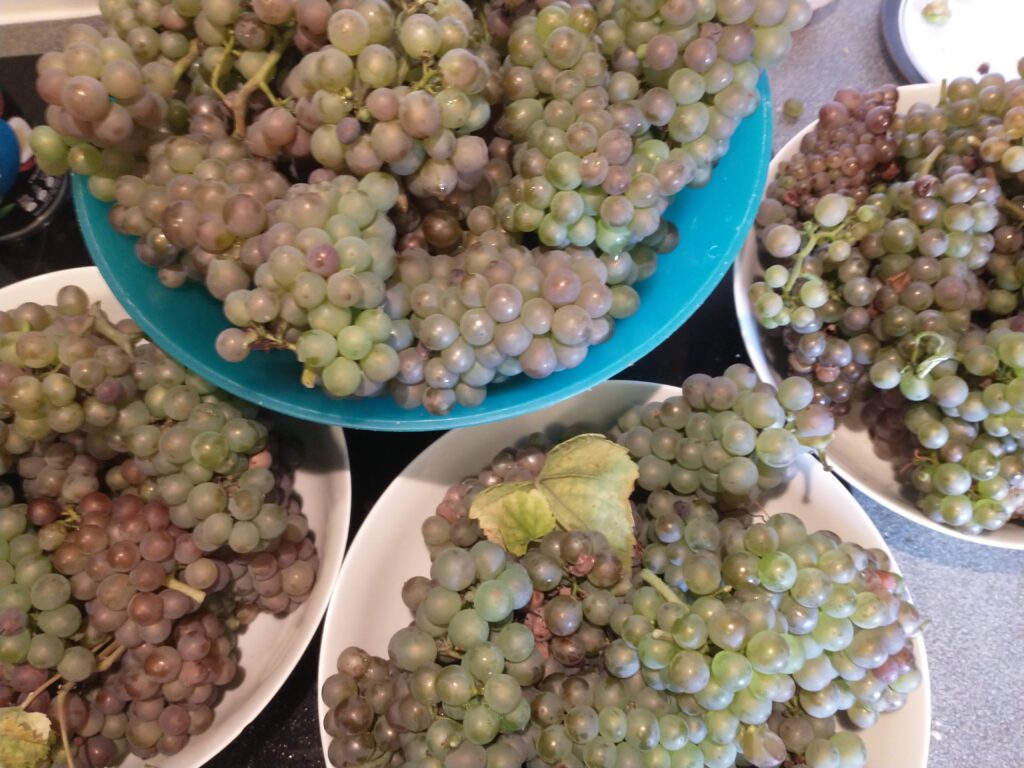
Take the grapes off the stems (you don’t need to be meticulous). And put them in a plastic container.
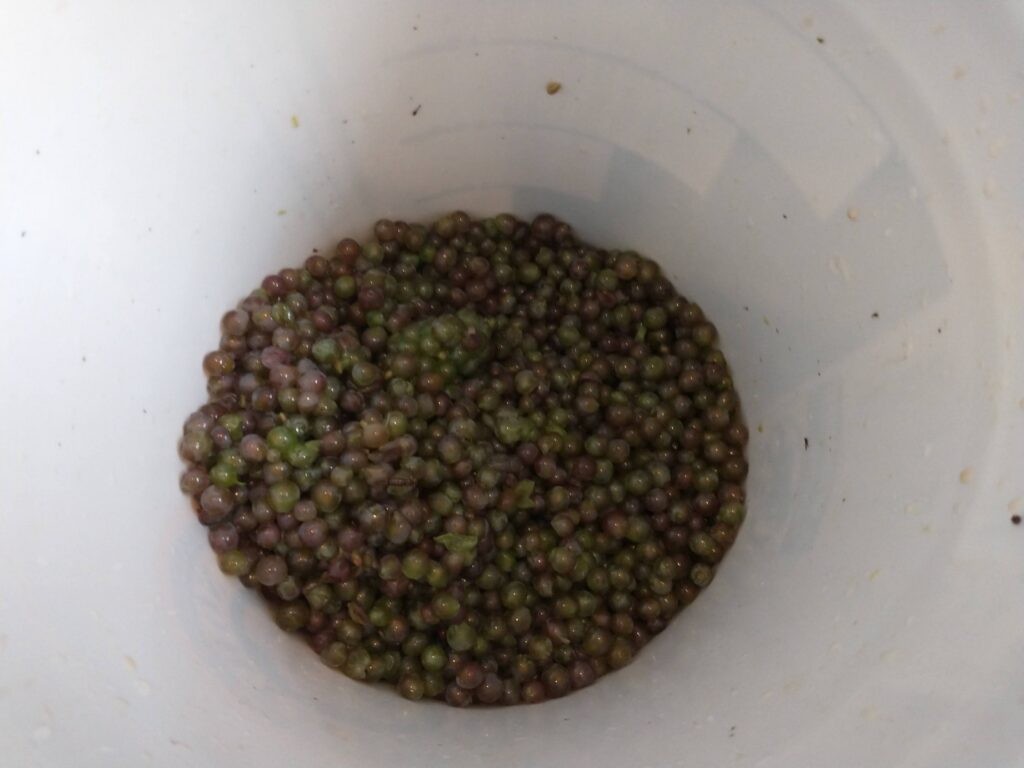
Crush them with anything you can crush with to extract as much liquid as possible. We actually find that (clean) feet work well, but you could use a potato masher. Don’t blend them in a blender though, you want to keep the pips intact because they are bitter.
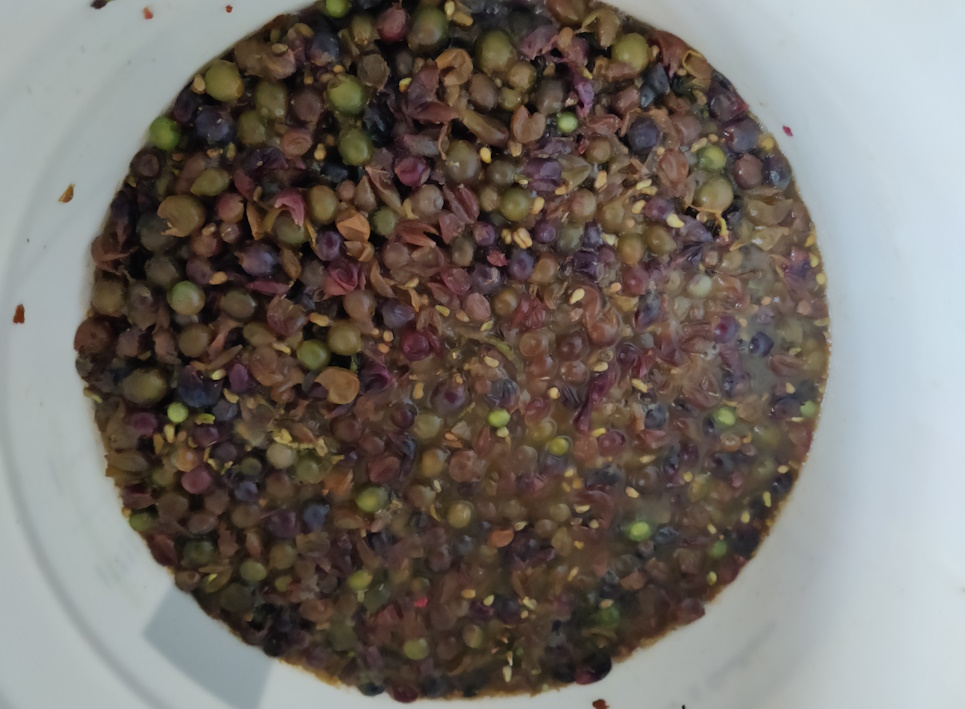
We made a rosé, because we have multiple types of grape, so kept the skins and pulp. You could filter out the skins and pulp and just keep the juice at this stage if you want to make a white wine. To make a red wine you will need red grapes and to keep the skins and pulp.
For every 5L must (juice + skins etc) add one crushed Campden tablet which will get rid of nasty bacteria and yeast. Cover the must with a cloth and wait a day for the tablet to work.
Optional: The following day add sugar if you want to. The ratio we use for all our wine is around 250g sugar for each litre of juice. (Pro winemakers use a hydrometer to gauge the correct amount of sugar but we don’t have one. The more sugar, the more alcoholic the wine is likely to be.)
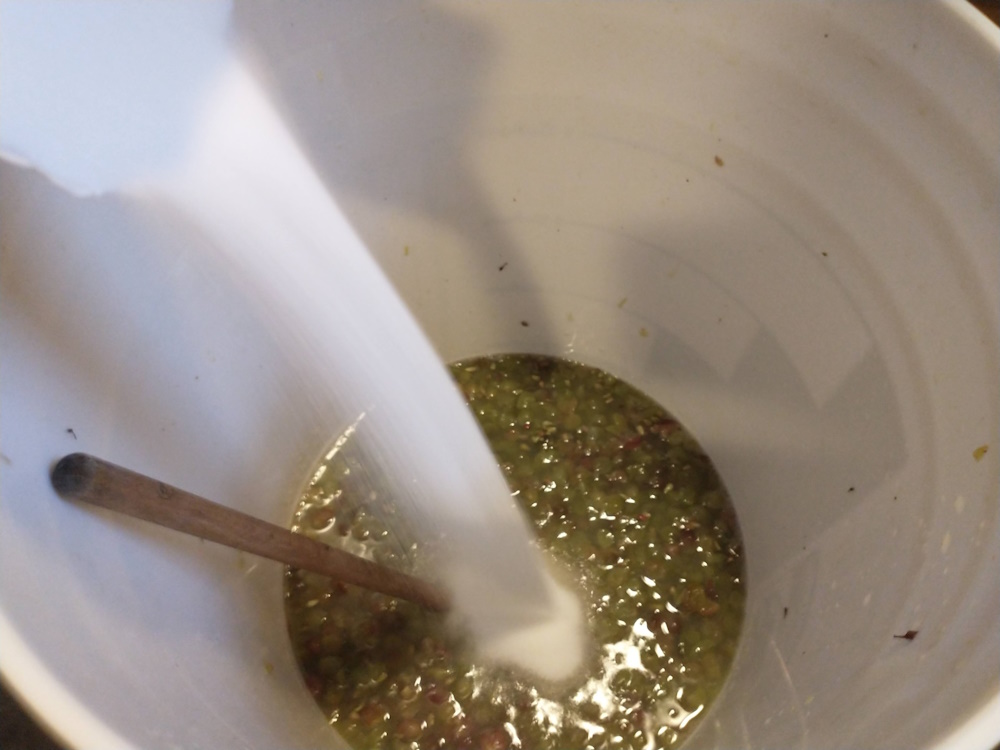
Add a sachet of wine yeast and stir. You could also add yeast nutrient if you want. If you have a tub of yeast, check the instructions, usually it’s a teaspoon of yeast for every 5 litres.
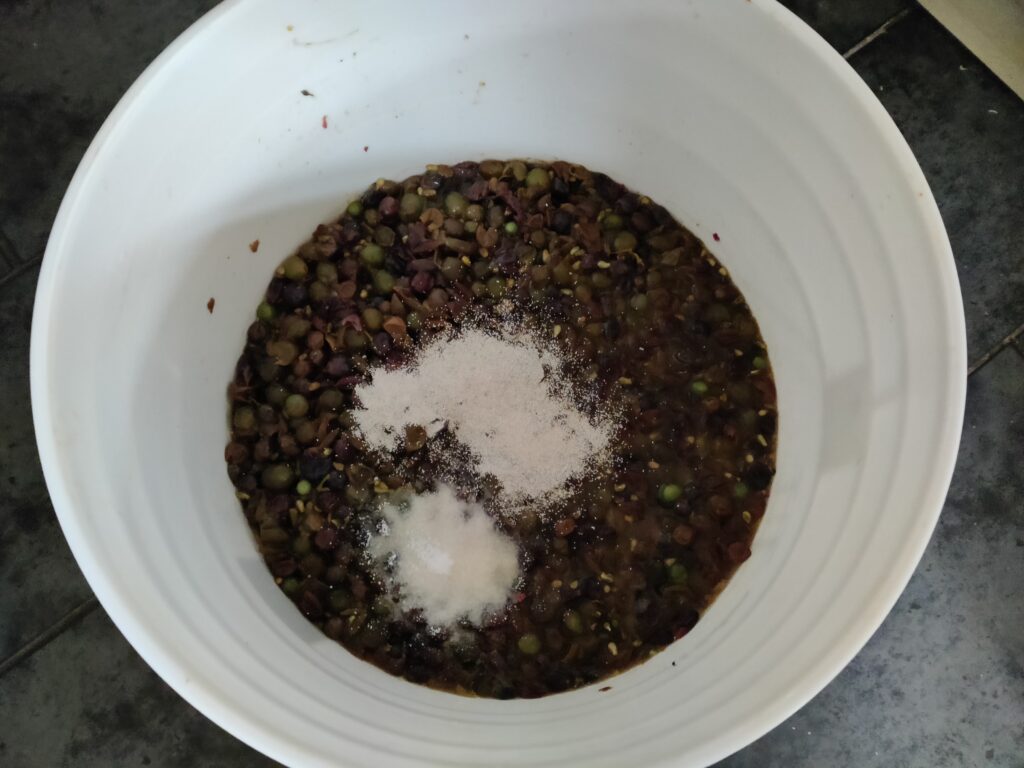
Put a clean cloth over the bucket (to stop fruit flies getting in). Leave for a week, stirring once a day with a sterilised spoon.
Strain the must through a clean cloth, discarding the fruit (put it on the compost) and pour the liquid into a sterilsed demijohn.
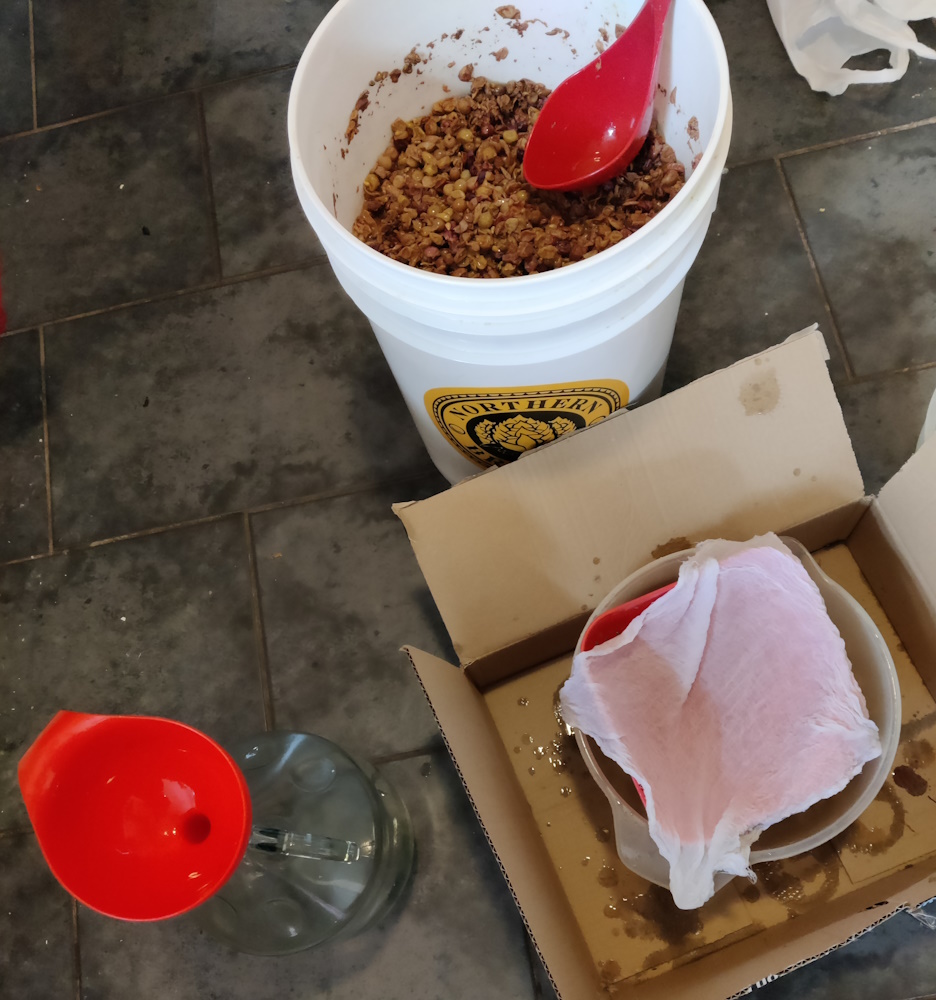
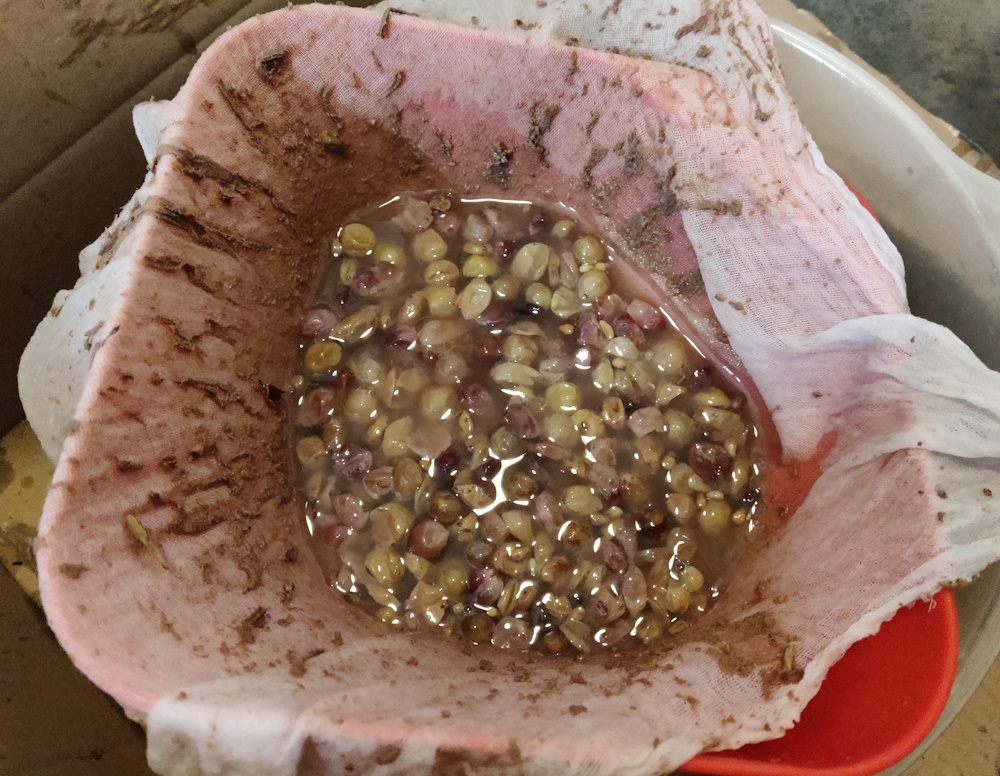
Put a bung and airlock in and wait for the blips. You can see the fermentation happening as the bubbles pass through the airlock. Don’t worry if it’s cloudy, it will clear. It does look a little like pepto bismol at this stage!
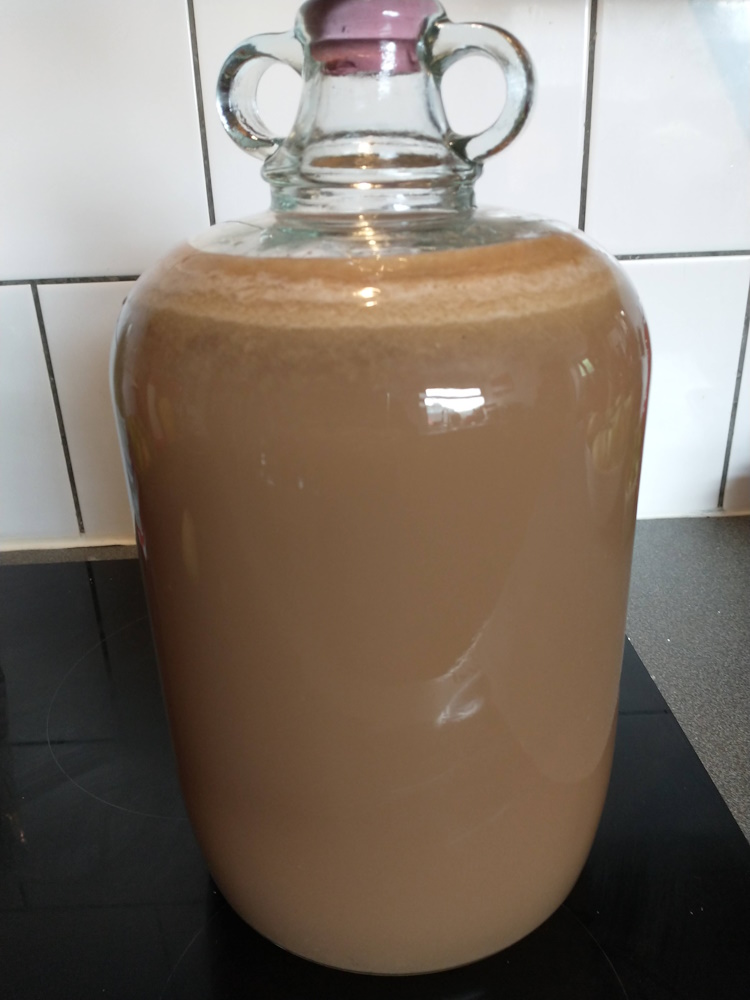
Let it ferment for a couple of months. It will be finished when there are no more bubbles.
You can rack it off into another demijohn to get rid of sediment. We added wine finings to clear the wine, following the instructions on the packet.
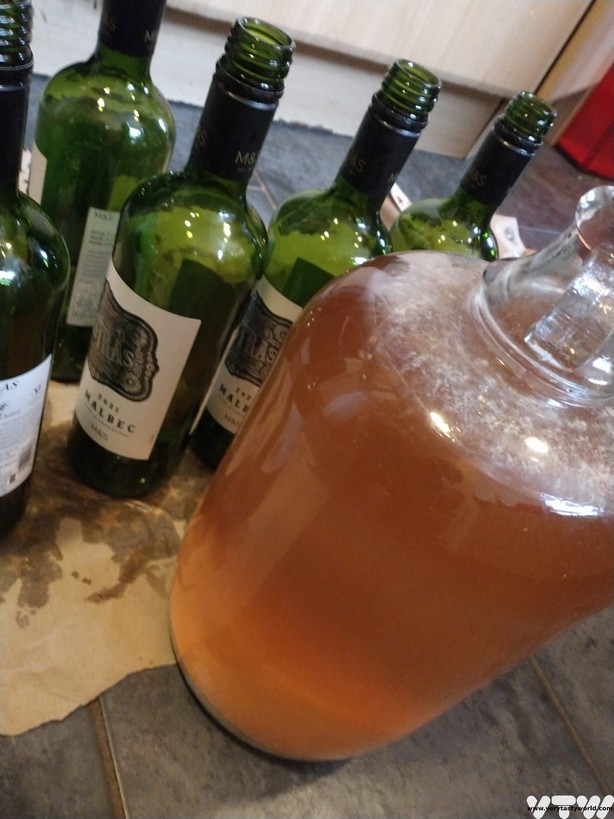
Then transfer to sterilised bottles. We recycle old wine bottles with screw caps.
Enjoy!

Latest Recipes
- Brussels Sprout Kimchi Recipe
 It is well known that Brussels sprouts are not the greatest vegetable in the world. But our Brussels sprout kimchi recipe makes them utterly delicious!
 - How To Make Miso Paste
 Miso is an essential ingredient in Japanese cuisine. You can make your own miso which is really tasty. Here’s how to make miso paste.
 - Making Wine from Grapes
 Making wine from grapes is great fun, especially if you have access to a vine. Here’s our method!
 - Damson Preserve Recipe – Damson Jam
 Damson jam is one of the most delicious preserves of autumn. Here’s our easy-peasy damson preserve recipe
 - Fermented Red Onions Recipe
 Red onions are really easy to ferment and they taste delicious – sour and crunchy. Here’s our fermented red onions recipe.